.png)
Tips for Preventing Wheelchair Damage on Flights
Updated: Jan 27
According to DOT data, airlines mishandled 11,527 wheelchairs and scooters in 2023. This alarming statistic is a big reason many wheelchair users hesitate to fly. Airlines often treat wheelchairs like luggage, prioritizing efficiency over care.
With the holidays approaching, more people are taking to the skies. So, I thought it would be a great time to share some tips I've learned to help prevent wheelchair damage on flights. Please note that the laws and regulations I cover are specific to the United States. If you're flying elsewhere, some of these tips may not apply.
1. Know Your Rights / Bring a Copy With You

The Air Carrier Access Act (ACAA) protects the rights of travelers with disabilities while flying. It’s part of the DOT’s Air Passenger Bill of Rights, which outlines your rights as a passenger with a disability. These rights include:
Airlines must allow assistive devices as carry-ons in the cabin free of charge, consistent with safety rules.
Assistive devices do not count against your carry-on limit.
Priority in-cabin stowage must be available for at least one normal-sized collapsible manual wheelchair on aircraft with 100 or more passenger seats.
Manual wheelchairs that cannot be transported in the cabin must be transported in the cargo compartment, following safety and security requirements.
Airlines must accept a battery-powered wheelchair if it fits in the cargo compartment and can be transported safely.
Airlines must provide for the checking and timely return of assistive devices at the gate for use in the terminal. If an airline loses, damages, or destroys your wheelchair, they must compensate you up to the original purchase price.
Some believe that airlines are no longer responsible for damage costs due to changes in regulations. But that is not the case. Airlines were responsible for wheelchair damage before the new rules were established.
I recommend reading through the bill of rights and bringing a copy with you when traveling. If an airline violates the ACAA or DOT regulations, having a physical copy can support your case.
2. Notify the Airline At Least 48 Hours In Advance

It's best to notify the airline as soon as possible. Let them know your wheelchair’s make, weight, dimensions, and battery type. While the FAA has its own battery rules, which you can find here, airlines may have additional requirements. Always check with them first to ensure your wheelchair battery can be accommodated.
Ask if you can gate check your wheelchair. If you need a transfer or aisle chair, make sure to request one. These chairs help transport individuals from their personal wheelchairs at the gate to their seats inside the plane. If you can’t walk from the gate to your seat, an aisle chair is essential. The airline staff should also inquire if you need assistance transferring between chairs or if you can manage on your own.
3. Prepare Your Wheelchair

Preparing your wheelchair beforehand can make a significant difference. Here are some suggestions:
Remove loose or valuable parts (like footrests) and store them in an extra checked suitcase. You can check in a suitcase with medical equipment for free.
If you can't remove easily broken items, label them with fragile stickers. The larger, the better.
Tape instructions on how to operate, disassemble, and reassemble the wheelchair somewhere visible to the ground crew. Use clear packing tape to secure it.
Some people prefer to use bubble wrap or foam for added protection.
Prepare your battery according to the airline's guidelines if your wheelchair has one.
4. Gate Check If Possible

Gate checking means bringing your wheelchair to the terminal gate and leaving it with the flight attendant before boarding. This significantly reduces the risk of damage. Your wheelchair spends less time in the airline's hands and avoids the conveyor belts that can be rough on fragile items. For example, here is a video of the conveyor system at the Sea-Tac airport in Washington.
5. Check Wheelchair Insurance

If you have insurance for your wheelchair, ensure it covers damage from flights. If it doesn’t, check how much the airline would compensate if your wheelchair is damaged. The bill of rights states that airlines must provide compensation up to the original purchase price. This means they may not always give you enough money to replace it.
6. Take Pictures of Your Chair Directly Before and After the Flight
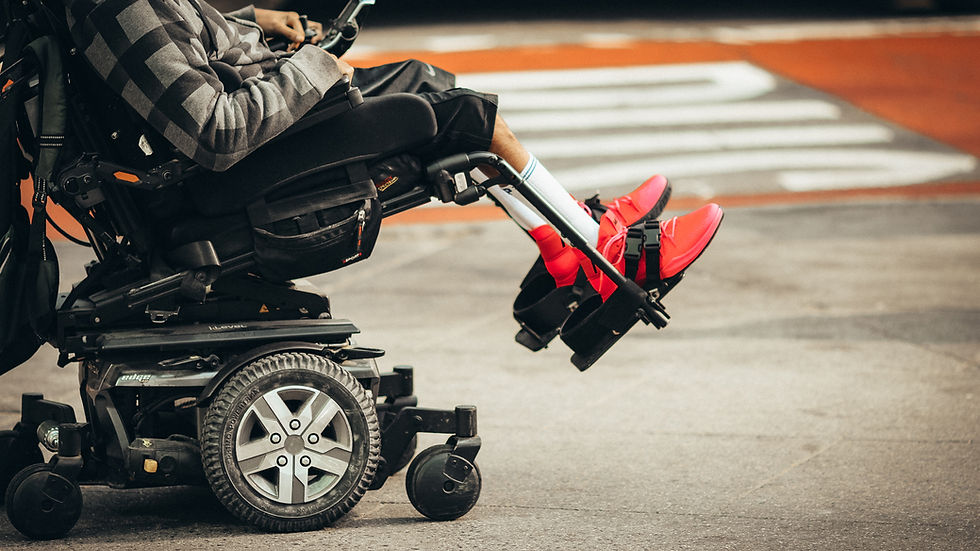
Taking pictures of your wheelchair before and after the flight can be incredibly helpful. These photos can support your case if you need to file a complaint with the Office of Aviation Consumer Protection or an insurance claim. Be sure to take multiple detailed pictures, focusing on areas that might easily break, such as the battery compartment, footrest, handles, or joystick.
7. Consider a Rental

If you can use a rental wheelchair, I always recommend it. This way, if your wheelchair gets damaged during your trip, it won’t be your personal one. You may be liable for damage to the rental, but you won’t be stuck with a broken wheelchair upon your return. You can rent a wheelchair from a local mobility equipment store near your home or at your destination. If you're going on a cruise, Special Needs at Sea and Scootaround offer wheelchairs, scooters, and power chairs delivered straight to your cabin or hotel room. They also provide other medical equipment like hospital beds and shower chairs.
If you're renting from a location close to home, check if they have branches at your destination.
8. Look Up Wheelchair Repair Shops or Rental Places at Your Destination

Before your trip, write down several wheelchair repair shops or rental places at your destination. Include their addresses and phone numbers. This way, if your wheelchair is damaged, you'll know exactly where to go for help.
9. If Your Wheelchair is Damaged, Alert the Airline, Then File a Complaint with the Office of Aviation Consumer Protection

If your wheelchair is damaged, your first step is to contact the airline. Ask for the Complaint Resolution Official (CRO) or a supervisor. The CRO is trained in disability-related issues and has the authority to resolve complaints. If that doesn’t work, you’ll need to contact the Office of Aviation and Consumer Protection to file a complaint. You can do so here. Make sure to have your ticket, itinerary, invoice, flight details, and any supporting documentation ready.
You can also call the DOT Office of Aviation Consumer Protection’s Disability Hotline at 1-800-778-4838. The hotline is available from 9 AM to 5 PM on weekdays, EST.
10. TSA Cares

If you're worried about your wheelchair going through security, TSA Cares can assist you. TSA Cares “provides information on security procedures aimed to help passengers with disabilities, medical conditions, and individuals needing additional assistance to better prepare for the security screening process.” If you’d like to request help and your flight is within 72 hours, call TSA Cares at (855) 787-2227. For flights outside of the 72-hour window, please use this form.
I hope these ten tips help you feel more confident about traveling with a wheelchair. If you have any concerns, don’t hesitate to reach out! As a travel agent, I can assist you in finding unique itineraries that cater to your specific needs.
Join my COVID-safer group trips!
Arrecife Luxury Estate at Punta Cana Resort & Club, November 2026
I am looking for people to join a possible group trip to Michigan in July 2026. If you are interested, let me know!
Join my cruise group trip! Due to the huge discount (the selling price is currently $1,000 more than my group price), I am opening up the trip to anyone! However, I am still prioritizing hosting COVID-safer get-togethers on the ship.
If you don’t need a travel agent but have found my resources helpful, I would really appreciate a tip! Thank you!
NOTE: I cannot actually drink coffee or any caffeinated beverage due to my POTS, so you will not actually be buying me coffee. Money will most likely go to treats for my dog instead.


Comments